Tracking Blood Glucose at Home. To diagnose feline diabetes veterinarians use the following tests.
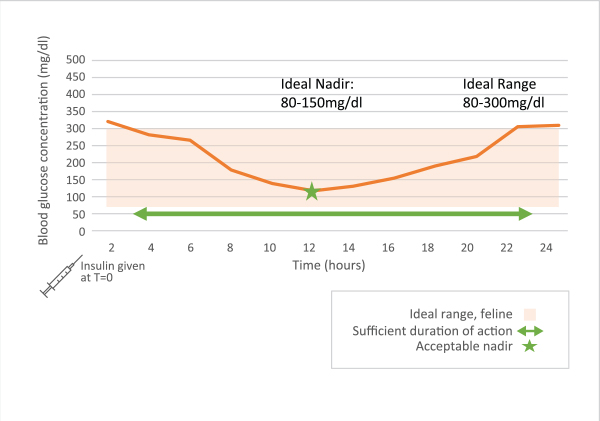
Interpreting Glucose Curves
Within Normal Limits The normal healthy range for the blood sugar of a non-diabetic fasting cat is between 75 and 120 according to the Merck Veterinary Manual.
Diabetic cat blood sugar ranges. A stable cats with diabetes exhibits a blood glucose range of around 120 to 300 mgdL for most of a 24-hour period. If you want to control your cats diabetes as well as possible buy a glucometer any major pharmacy and learn how to use it. The normal blood glucose level is 80-120 mgdL 44-66 mmolL.
Diabetic cats often have levels over 400 22 or even 600 mgdL 33 mmolL. Cat is 15 yo. Diabetic cats often have levels over 400 22 or even 600 mgdL 33 mmolL.
High glucose levels can indicate feline diabetes or related conditions. No other ss of distress. If the insulin dose is suited for your diabetic pet it will lower the glucose levels and maintain them at a normal level.
Cat is experiencing excessive thirst excessive urination fasting blood sugar 54 no weight loss or gain. DKA at diagnosis is more common in younger children. Test results that show a blood-sugar level over 200 indicate the possibility of diabetes.
The normal blood glucose level for cats is 80 to 120 mgdL while diabetic cats often have levels over 400. Therefore clinical signs alone are not sufficient to make a diagnosis. Frequencies range from 15 to 70 in Europe Australia and North America 1 8.
All it takes is a little understanding. Blood glucose concentrations in cats with diabetes mellitus were significantly higher than in cats with stress hyperglycemia. The glucose levels considered normal in felines are from 80 to 120 mgdl.
Cats most commonly have type 2 diabetes caused by decreased insulin production or insulin resistance and it often is associated with obesity. The two most important laboratory tests are the blood glucose level and a urinalysis. The normal blood glucose range for a dog it is not dependent on body weight is approximately 70-150 mgdL.
The blood glucose range for cats is 64 to 170. A value 2 or greater likely indicates that an increase in dose is required. A handheld glucometer is one way to monitor these levels.
There may be slight variations according to the cats age and breed. Diabetic cats also have glucose present in the urine. Blood glucose concentrations in cats with stress hyperglycemia were between 81 and 604 mmoll Median 103 in cats with diabetes mellitus between 85 and 700 Median 277.
However stress alone can result higher blood-sugar levels up to 300 to 400 in cats without diabetes attributed to a surge of released adrenaline. Diabetic cats often have levels over 400 or even 600 mgdL. It causes increased thirst urination appetite and weight loss.
Diabetes mellitus is a chronic disease in cats whereby either insufficient insulin response or insulin resistance leads to persistently high blood glucose concentrations. Diabetes is an inability of the body to regulate blood sugar caused by an abnormality of the pancreas and is the second most common endocrine disease in cats. Ranges for various machines are in the same ballpark - not all numbers match.
Diabetic cats also have glucose present in the urine. If you dont want to have to play nurse maid to a diabetic cat make sure her blood sugar levels are within a healthy range. Polyuria polydipsia syndrome is.
Handheld glucometers are not crucial but are easy to. Your aim will be to keep the blood glucose above 100 all the time and below 200 as much as possible. Diabetes mellitus is less common in cats than in dogs.
Fasting blood-sugar level. Diabetic cats also have glucose present in. The graph below demonstrates an ideal blood glucose curve for a cat receiving Vetsulin twice daily.
The normal blood glucose level is 80-120 mgdL. And for dogs it is 70 to 138. Diabetic cats also have glucose present in the urine.
Eighty to ninety-five percent of diabetic cats experience something similar to. Your vet can monitor blood sugar levels using a glucose curve andor by creating a cat blood sugar levels chart. A stable cat with diabetes should have blood glucose in the range of 120300 mgdL for most of a 24-hour period.
Diabetes affects up to 1 in 230 cats and may be becoming increasingly common. Your vet will establish the normal glucose levels. The combination of these findings in a cat with at least two of the clinical signs of diabetes is sufficient evidence to make a diagnosis of diabetes.
With the long duration of action of glargine there should be minimal periods when blood glucose is 14mmolL 240mgdL for cats treated for more than 2 to 3 weeks and hence well controlled cats should almost always be 0 or 1 for urine glucose. Normally a cats internal control systems ensure that the blood glucose blood sugar levels stay at the correct level which is between 60 and 150 mgdl 33 83mmoll Hypoglycemia by definition means low blood glucose. Normal levels range from 80 to 120 mgdL in cats.